Introduction
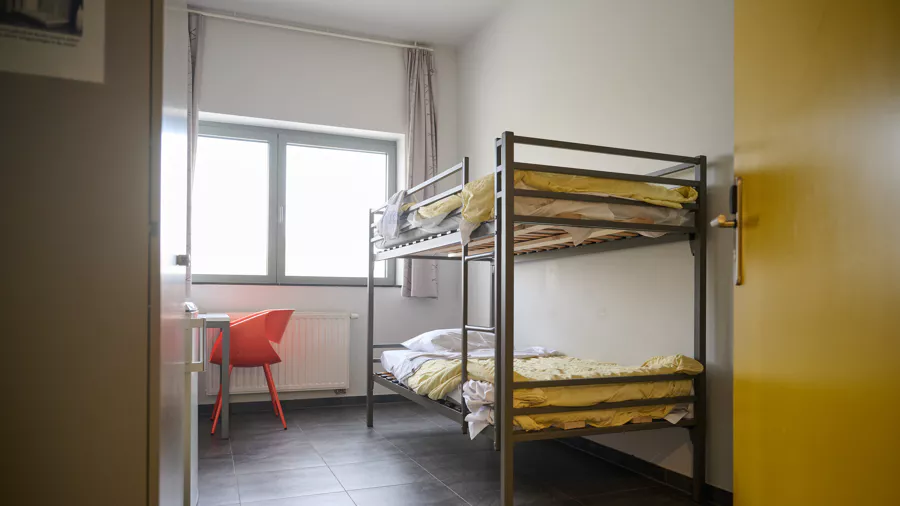
CAW is part of Flanders' network of general welfare centres, supporting people facing housing, financial, legal, relationship or crisis issues. Datashift replaced their manual, ad-hoc bed allocation with automated logic that applies the rules consistently and predictably.
Client
CAW Rivierenland
Client since
2026
Solutions
The problem
The newly developed fairness rules for night shelter at CAW existed only on paper. Registration ran through Jotform, but bed allocation was done entirely by hand, with no systematic application of the agreed rules. The process was inflexible and heavily manual, especially the allocation logic and cancellations, producing opaque assignments that regularly sparked disputes during evening intake. It was error-prone and left room for gaming (e.g. manipulating registration times), and insight was available only via monthly manual Excel exports, limiting transparency for both the local governments and CAW's own oversight.
How we solved it
Datashift designed and built an integrated allocation application on the Microsoft Power Platform. A model-driven Power App backed by Dataverse became the single working tool for every user, with role-based screens and permissions for local governments, shelter staff and CAW management; replacing the patchwork of Jotform and Excel. Because the allocation rules are too complex to maintain reliably in low-code, Datashift implemented them server-side as a Python component in Microsoft Fabric, which the app calls to calculate daily bed assignments automatically. Power Automate handles process orchestration and Power BI delivers reporting: each local government gets daily visibility into its consumption directly in the Power App, and CAW gets shared dashboards for monitoring and meetings via a dedicated Power BI report. Simple parameters (e.g. maximum nights per person, reserved nights per local government) can be adjusted directly in the app.
The results
Our solution not only answers the needs of today, it is also future-proof for the whole organization.
.svg)
Time
It's less time consumingfor CAW and the local governments to arrange the allocations.

Insights
Became more clear as CAW has license and access to Power BI, the local governments have their numbers in the Power App and get a screenshot of the Power BI every month

100%
Automated
Key Learnings
Our basic rules when automating
Keep it simple
Keep complex, changeable business rules out of low-code: isolating the allocation logic in a maintainable Python component made the solution both flexible and durable.
Keep it unambiguous
Role-based access to a single source of truth removes ambigity: shared, consistent data reduces the friction that manual, opaque processes create.
Keep it flexible
Design for change: exposing key parameters in the app lets CAW adjust policy without a redevelopment cycle.
More case studies
We deliver impact where it matters most.


Unlocking Viewer Insights with a Scalable Data Platform
Streamz is the Flemish video-on-demand platform offering local and international series and films through a subscription-based model. Streamz focuses on delivering high-quality content tailored to local audiences, supported by a strategic partnership with Paramount.


Predicting Platelet Demand: Transforming Healthcare Logistics with Time Series Forecasting
Improving platelet demand planning with time series forecasting to support reliable healthcare logistics.


Building Practical AI Governance at KBC with Collibra
KBC, one of Belgium’s leading financial institutions, has a long-standing focus on responsible innovation and efficient risk management. With the European AI Act introducing new expectations around transparency, risk management, and accountability, the organization saw an opportunity to strengthen and streamline its approach to AI governance. For KBC, this meant bringing different teams’ perspectives on AI together into one coherent framework—without disrupting existing processes.