.svg)
Introduction
A national logistics company discovered that treating all delivery areas the same way was costing them efficiency. With location data and the right analytical foundation, they learned to see what actually matters: not just volume, but the real conditions that make a round harder or easier to deliver.
Client
Logistics operator
Client since
Solutions
Technologies
The problem
Two delivery areas can move the same number of parcels but demand completely different effort. Urban density, walking distance, route structure, customer spread, and how work organizes in practice all change the math. Planning teams were working blind: they could see what was planned and what actually happened in the field, but couldn't connect the two.
The core challenge was fragmentation of data: operational signals, planning information, and geographic context lived in separate systems. Without a shared view, planners couldn't reliably answer whether a round is balanced.
How we solved it

Build a Shared View of What's Actually Happening
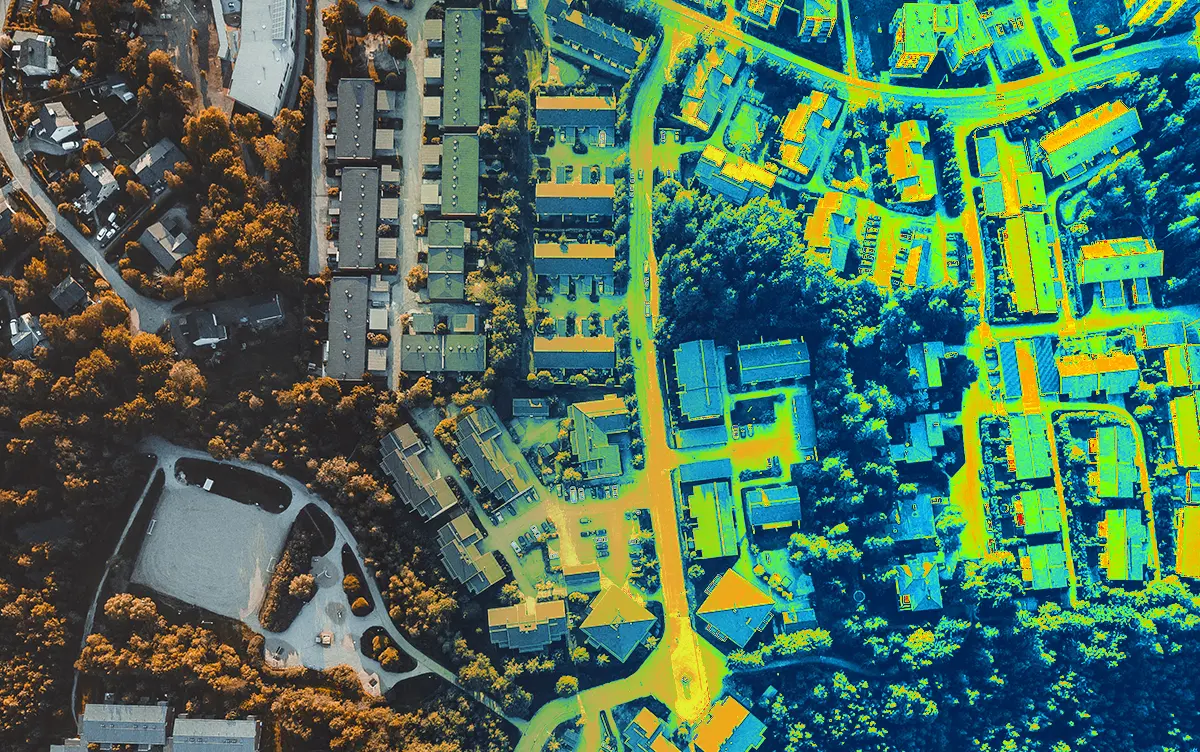
We made location the center of the analysis. We structured all available data (planning information, operational observations, location context) around the places where delivery work actually happens. This meant translating complex operational signals into business language: local workload, delivery density, route complexity, recurring effort patterns. Planning and transformation teams went from fragmented information to one consistent view of how conditions differ across the network.

Use Geospatial Intelligence to Reveal What Drives Effort
We mapped where activity happens, how delivery areas relate to each other, and which conditions create complexity. This gave teams a precise way to compare areas and understand the real drivers behind operational work. Thiscreated a more nuanced picture of the network. Dense urban zones, spread-out suburban areas, and mixed environments all showed up differently in the analysis.

Create a Foundation Ready for Predictive Insights
Once the data foundation was solid, we built analytics that explain patterns, flag anomalies, and support better planning. By combining operational analytics with a scalable data model, teams could compare planned work against real delivery behavior and refine their assumptions. This foundation is built for what comes next: AI-enabled planning. The organization now has reliable, reusable features about local delivery conditions.
The results
A reusable way to convert location-based operational complexity into insights that planning teams could trust and act on.
Network visibility
From fragmented data sources to one unified operational view
Planning reliability
Fairer area comparisons and evidence-based workload assumptions
Foundation readiness
Scaled analytics layer prepared for predictive modeling and AI-enabled decision support
Key Learnings
Our key learnings on geospatial data
Geospatial data only matters
when it answers real operational questions. We started by understanding what planning teams actually needed to decide, not by building the fanciest map.
Advanced analytics
should begin with concepts the business already uses. We translated location and operational data into planning language because that's what drives adoption.
Strong foundations
make AI possible at scale. Predictive models fail when data is messy or definitions are fuzzy.
More case studies
We deliver impact where it matters most.


Unlocking Viewer Insights with a Scalable Data Platform
Streamz is the Flemish video-on-demand platform offering local and international series and films through a subscription-based model. Streamz focuses on delivering high-quality content tailored to local audiences, supported by a strategic partnership with Paramount.


Predicting Platelet Demand: Transforming Healthcare Logistics with Time Series Forecasting
Improving platelet demand planning with time series forecasting to support reliable healthcare logistics.


Building Practical AI Governance at KBC with Collibra
KBC, one of Belgium’s leading financial institutions, has a long-standing focus on responsible innovation and efficient risk management. With the European AI Act introducing new expectations around transparency, risk management, and accountability, the organization saw an opportunity to strengthen and streamline its approach to AI governance. For KBC, this meant bringing different teams’ perspectives on AI together into one coherent framework—without disrupting existing processes.